 MRRTrack
 Uizze
Design examples for building a website with AI
Uizze collects examples of web pages and apps. You give these examples to your AI tool to show it what your website should look like.
Who is it for? Developers and people building websites with AI.
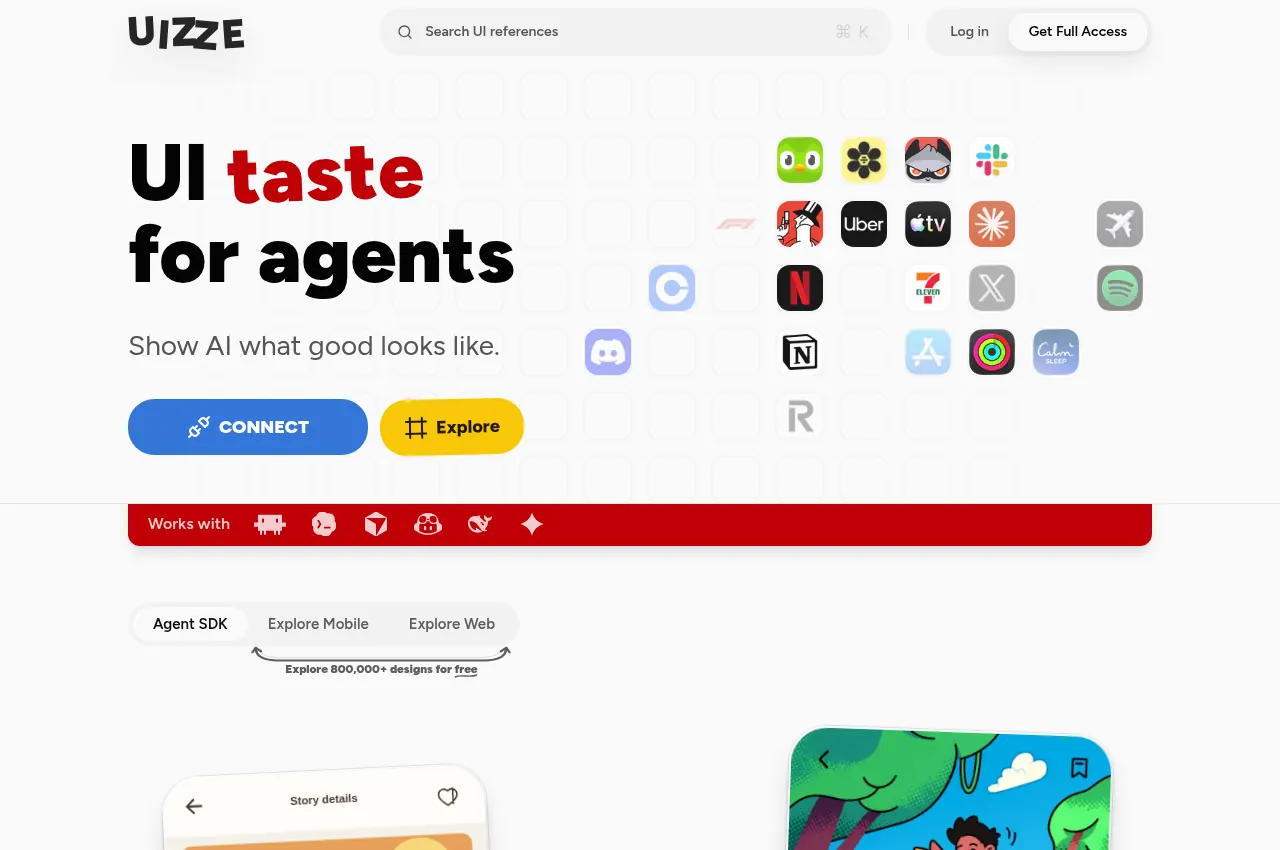
Example use
You are building a booking page. You find an example in Uizze and give it to your AI tool to guide the page layout.
Why someone would pay. A website builder may pay to spend less time searching for examples and fixing the design.
MRR is the monthly value of active subscriptions. It is neither cash collected this month nor profit.
View monthly figures and source
| Month | Collected revenue |
|---|---|
| 2026-07 | $345 |
| 2026-08 | $1,748 |
| 2026-09 | $3,525 |
Source: TrustMRR, accessed October 30, 2026. Collected revenue, not MRR or profit.
What the numbers show. Monthly collected revenue grew from $345 in July to $3,525 in September 2026. MRR increased over the last 30 days, while collected revenue fell 7.9% over that window. Subscriptions and lifetime purchases coexist, so these metrics tell different stories. [1]
An idea to start
Create a collection for one industry, such as hair salons: booking a service, choosing an appointment and confirming it. Sell a starting point that customers can adapt.
Find a first customer
Show three designs to five people who build salon websites. Offer to sell them the collection, then check whether they use it on a real project.
A limitation to know
Revenue starts from a small base. Some sales provide lifetime access: they pay once, but support continues. Growth does not yet establish that customers stay for a long time.
 DataFast
Find out which marketing activities bring paying customers
DataFast shows where website visitors come from and which ones go on to pay. Owners can compare the revenue generated by different marketing activities.
Who is it for? Owners of online software businesses looking for customers.
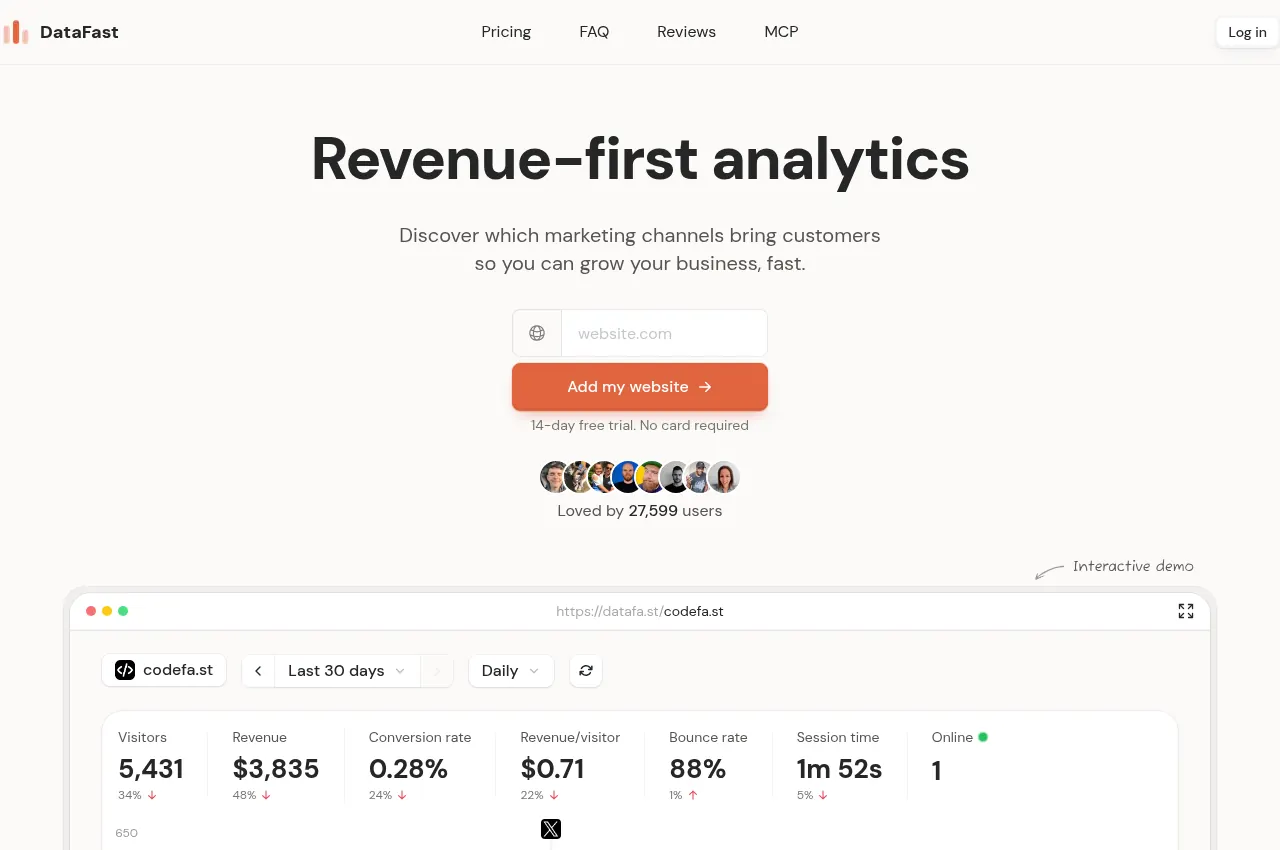
Example use
You promote your product in a newsletter and on social media. You want to know which source brings purchases, rather than just visits.
Why someone would pay. Knowing what brings sales helps owners decide where to spend their next marketing dollar or hour.
View monthly figures and source
| Month | Collected revenue |
|---|---|
| 2026-01 | $17,948 |
| 2026-02 | $19,822 |
| 2026-03 | $21,306 |
| 2026-04 | $20,969 |
| 2026-05 | $20,607 |
| 2026-06 | $21,487 |
| 2026-07 | $27,158 |
| 2026-08 | $27,523 |
| 2026-09 | $31,455 |
Source: TrustMRR, accessed October 30, 2026. Collected revenue, not MRR or profit.
What the numbers show. Monthly collected revenue rose from $17,948 in January to $31,455 in September 2026, up 75%. The longer-term increase is clear, although MRR fell 6% over the last 30 days. Growth can include weaker months. [2]
An idea to start
Provide small software businesses with a report on newsletters where they advertise: placement cost, signups and purchases. Prepare the report manually first.
Find a first customer
Find three founders already buying newsletter ads. Sell an initial report and see whether they use it when choosing their next placement.
A limitation to know
Founder Marc Lou already had a large audience. Copying the software does not give you that audience. People may encounter a product several times before buying, so a sale cannot always be attributed to one source.
 ChatSEO
Find what to improve on a website to be seen on Google
ChatSEO analyzes websites and suggests changes for search engine optimization, or SEO: improving visibility in search results. It helps owners choose what to work on.
Who is it for? Website owners, online stores and web agencies.

Example use
Your store sells shoes, but few people reach its pages through Google. A tool like ChatSEO can help identify pages and topics worth improving.
Why someone would pay. An owner may be more willing to pay for specific changes than for a long report they do not know how to use.
View monthly figures and source
| Month | Collected revenue |
|---|---|
| 2026-01 | $15,280 |
| 2026-02 | $14,596 |
| 2026-03 | $16,843 |
| 2026-04 | $21,442 |
| 2026-05 | $28,166 |
| 2026-06 | $28,582 |
| 2026-07 | $27,484 |
| 2026-08 | $30,616 |
| 2026-09 | $41,359 |
Source: TrustMRR, accessed October 30, 2026. Collected revenue, not MRR or profit.
What the numbers show. Monthly collected revenue rose from $15,280 in January to $41,359 in September 2026, up 171%. MRR and collected revenue also increased over the last 30 days, by 12.5% and 18.3% respectively. Recent monthly growth is the most consistent in this selection. [3]
An idea to start
Build a tool for one category of online stores. It identifies product pages to improve and drafts changes for the merchant to approve before publication.
Find a first customer
Choose five stores in one industry. Suggest three concrete improvements for each and charge for implementation. See whether they want another round the following month.
A limitation to know
The team already has SEO expertise and benefits from Paul Vengeons’s visibility. The software cannot guarantee Google rankings. Time spent checking recommendations also has a cost.
 Hirevire
Collect video answers before a job interview
Hirevire lets recruiters send questions to applicants. Each applicant records answers when available. The recruiter watches them later and chooses whom to interview.
Who is it for? Small teams and agencies that recruit regularly.
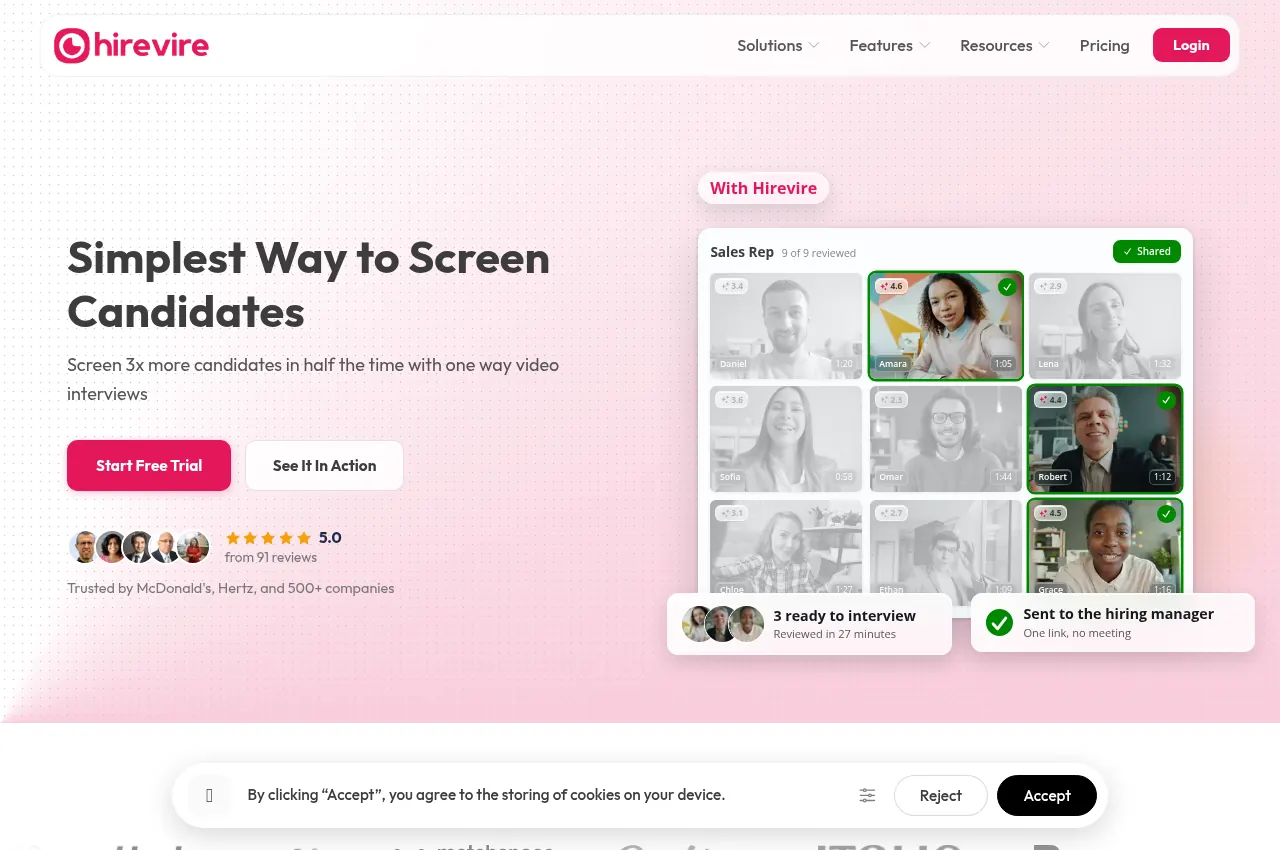
Example use
You need to hire a salesperson. Before scheduling calls, you ask applicants for a short video introduction and watch the answers at a convenient time.
Why someone would pay. A team hiring regularly may pay to spend less time arranging and conducting initial calls.
View monthly figures and source
| Month | Collected revenue |
|---|---|
| 2026-01 | $9,311 |
| 2026-02 | $11,214 |
| 2026-03 | $13,515 |
| 2026-04 | $9,431 |
| 2026-05 | $15,429 |
| 2026-06 | $13,474 |
| 2026-07 | $15,335 |
| 2026-08 | $13,463 |
| 2026-09 | $14,935 |
Source: TrustMRR, accessed October 30, 2026. Collected revenue, not MRR or profit.
What the numbers show. Collected revenue increased from $9,311 in January to $14,935 in September 2026, up 60%. MRR nevertheless fell 4.4% over the last 30 days. This case shows growth over the year, rather than recent acceleration. [4]
An idea to start
Build a tool for agencies recruiting salespeople: a few questions, recorded answers and a shared review rubric. Keep the hiring decision with the recruiter.
Find a first customer
Test the process with an agency on a real vacancy. Compare time spent and applicant response rates. Offer to continue at an agreed price for the next recruitment round.
A limitation to know
A company hiring once a year may cancel quickly. Some applicants dislike recording video, so provide an alternative. Appearance should not determine candidate quality.
 Voicy
Write in your apps by speaking
Voicy turns speech into text inside the apps and websites you use. You can dictate a message instead of typing it.
Who is it for? People who write many messages or documents.
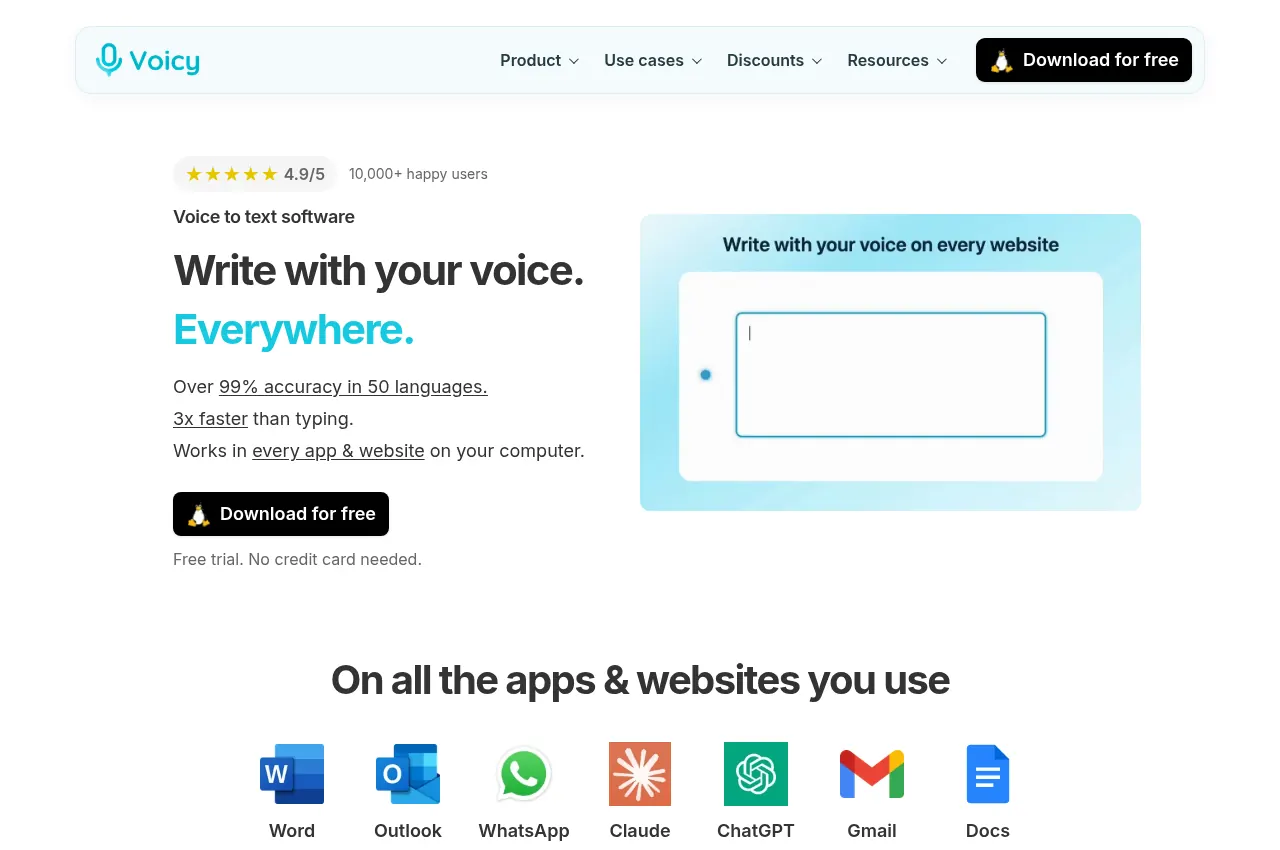
Example use
You open an email, turn on dictation and speak your reply. Text appears in the message; you review it before sending.
Why someone would pay. Saving a few minutes on a task repeated several times a day can justify a subscription.
View monthly figures and source
| Month | Collected revenue |
|---|---|
| 2026-01 | $13,877 |
| 2026-02 | $17,332 |
| 2026-03 | $18,863 |
| 2026-04 | $22,133 |
| 2026-05 | $20,564 |
| 2026-06 | $19,516 |
| 2026-07 | $18,757 |
| 2026-08 | $18,906 |
| 2026-09 | $19,428 |
Source: TrustMRR, accessed October 30, 2026. Collected revenue, not MRR or profit.
What the numbers show. Collected revenue grew from $13,877 in January to $19,428 in September 2026, up 40%, below April’s $22,133 peak. MRR increased 5.3% over the last 30 days, while collected revenue was almost flat at −0.7%. [5]
An idea to start
Build a tool for professionals making site visits. They dictate notes, and the tool organizes them into a report template for their industry.
Find a first customer
Have three professionals test one report template for five days. Measure time saved, including corrections. Ask whether they would pay to keep using it.
A limitation to know
Phones and computers already offer dictation. Your tool needs to do something more useful for a specific profession. Transcription costs and editing time can reduce its value.
The five ideas at a glance
| Opportunity | Customer to reach | Model to test |
|---|---|---|
| 01Design examples | People building websites with AI | Paid collection or subscription |
| 02Sources of paying customers | Small software businesses buying ads | Paid report, then subscription |
| 03Google visibility | Stores in one industry | Subscription and implementation help |
| 04Applicant video responses | Recruitment agencies | Team subscription |
| 05Text dictation | Professionals writing reports | Individual or team subscription |
These ideas are inspired by the tools and need to be tested with customers.
Which idea should you start with?
- Build websites? Start with designs for an industry you know.
- Know business owners buying ads? Help them understand what brings sales.
- Know SEO or recruitment? Simplify a small, repeated task in that field.
- Write the same reports repeatedly? Test a tool that turns dictated notes into a document ready to review.
Your 14-day validation plan
Before building software, check that someone will pay for the result. Here is a two-week working plan.
- Days 1–3
Choose a customer
Pick an industry and a task you understand. Find five people to speak with.
- Days 4–7
See how they do it today
Ask for a recent example. How long does it take? Which tool do they use? What gets in the way?
- Days 8–10
Offer a first paid result
Describe what you will deliver, its price and the deadline. You can do the work manually at first.
- Days 11–14
Check whether the customer wants to continue
Measure time spent and ask whether the customer would pay again. If not, find what is missing before building more.
The trap: copying the product and forgetting the customer
Software can have paying customers without being profitable. Before copying features, find people who have the problem and will pay to solve it.
Frequently asked questions
Are all these startups growing quickly right now?
No. All five grew over the period shown, but DataFast and Hirevire show recent MRR declines. ChatSEO has positive recent growth in both measures. Uizze and Voicy also illustrate why MRR and collected revenue must be distinguished.
Why do the charts differ from MRR?
Charts show collected revenue for each month. MRR is normalized monthly recurring revenue. Annual subscriptions or lifetime purchases can increase cash collected without producing the same MRR change.
What can I start with limited resources?
Choose a task you can deliver for a customer you can reach. Charge for an initial manually delivered result. Build software when customers return and several request a similar outcome.
Sources and data coverage
Snapshots accessed October 30, 2026. Links open detailed public TrustMRR profiles containing the monthly histories. Each screenshot also links to the official product website. All figures are US dollars. Charts exclude October because the month is incomplete.
Analysis dated October 30, 2026. Charts show monthly collected revenue through September, the latest complete month. MRR figures are separate snapshots. All five grew over the stated period; not all are currently accelerating.
How to read the evidence
Public TrustMRR profiles connect revenue to Stripe or Polar. We recorded the figures displayed on October 30, with payment syncs dated October 29–30. Figures can change, and different views may refresh at different times.
Monthly collected revenue can include annual subscriptions or one-off payments. MRR normalizes subscriptions. Neither measures profit. January–September changes are calculated from the displayed figures and rounded to whole percentages; 30-day changes come from the source.
Team sizes and founder details are reported by public profiles and official sites. Suggested explanations and offers are our analysis, not demonstrated causes of growth. This selection of public profiles is a set of useful cases, not an exhaustive ranking or an estimate of your likelihood of success.